Since Covid, hybrid working has become the norm rather than the exception in most offices. For myself, I am only required to physically come into my office once a week and, when I do, it is a very different place to the one I knew from before the pandemic.
Back then, I had always found the open-plan office a rather noisy environment: loud conversations would take place across desktops; it would be possible to hear phone calls from adjacent cubicles; there was a general hub-bub of activity. I would often have to adopt a conscious state of fugue in order to block out the surrounding distractions and to be able to concentrate on my own work.
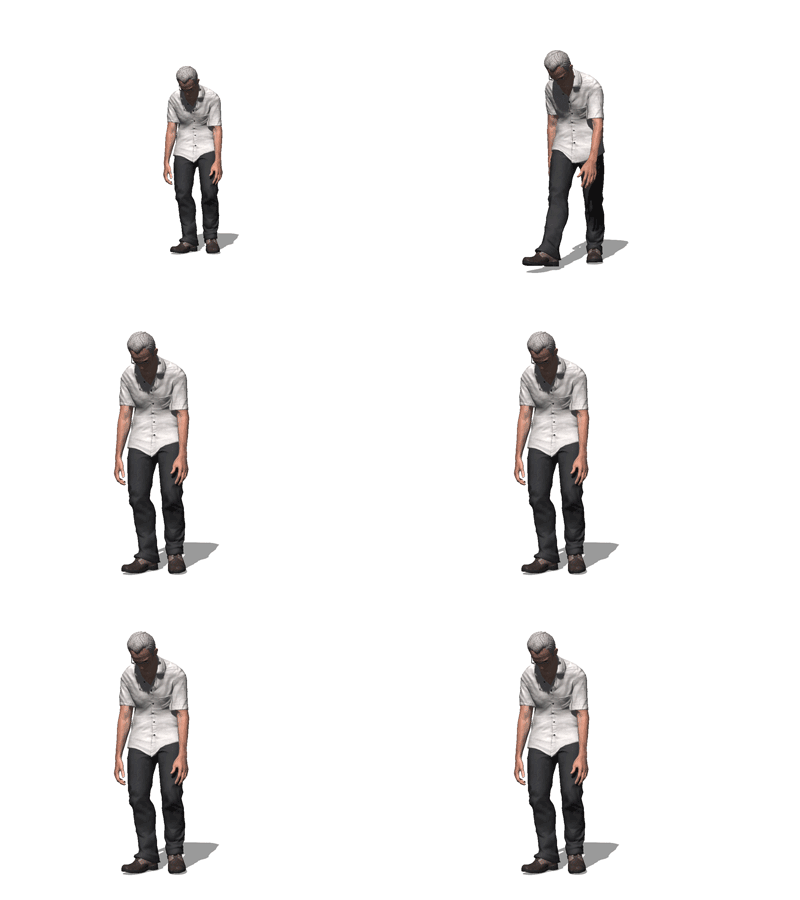
Now it is very different. Often, I will be the first person in the office; some days, I am the only person in the office. Despite the adoption of a supposed hot-desking strategy since Covid, many desks remain decidedly chilly from lack of use, their occupants preferring to work from home. An office, which was once irritatingly noisy, is now a deserted ghost town, only memories––and discarded laptop chargers––reminders of where my colleagues would once have sat.
Now, don’t get me wrong, there are many aspects of this change that I like. I prefer tranquillity to noise: I don’t miss the idle chatter; don’t miss other people’s commotions. However, a completely empty office is a little bit eerie. It feels rather like a B-movie horror waiting to start. I look around the room wondering who is going to be the first person to fall victim to the office slasher, and realise that I am the only choice. Or perhaps, I am in a spaghetti Western? The lone stranger riding into town, as the tumbleweed rolls across the middle of the main street.
The empty office also requires me to unwillingly step into many of my other colleagues’ roles. The potential benefit of quiet to my productivity is outweighed by the amount of times that I have to get up to deal with visitors who are seeking one of my missing workmates.
There is a sense of a lost shared identity, too. Although I may not engage greatly with my colleagues as individuals, collectively they do comprise a large part of the identity of the organisation; working together and sharing a similar collective purpose. Alone, this sense of purpose remains a more allusive entity; somehow working in abstract, with less meaning behind the activity. I feel that this sense of office-isolation is only likely to increase in the future. Artificial Intelligence is resulting in new working patterns potentially more disruptive and far-reaching than Covid, and ones that may result in workers becoming even more disenfranchised from the human benefits, which Work can provide: satisfaction; identity; reason.
© Simon Turner-Tree
Simon Turner-Tree goes off in search of purpose.
 Mudskipper Press