
In theory, I love crafting. In practice, I can’t stand it. And, let’s be honest, crafting is fundamentally more about practice than it is theory.
When I was a lad, I was always crafting – although it wasn’t called that then; ‘wasting time’ was a more frequent description – always making something crap out of lots of bits of smaller crap. I remember scouring the pavements for dirty spent matches, because my parents simply didn’t smoke enough cigarettes – and this when my dad had a 40-a-day habit – to meet the spent-match-demand that was required to fulfil my childhood ambitions to build the Empire State Building – to scale – out of matchsticks.
Nowadays, crafting has become commercialised; commodified. It is no longer necessary to forage for other people’s old litter when it comes neatly and hygienically pre-packaged.
Where my local crafting superstore should be a temple of inspiration, I find it a graveyard of imagination. All the ‘crafting’ has already been done in a plastics factory in China; the result, a crafting ‘kit’, which stifles creativity; promotes homogenisation. 21st century crafting has been neatly oppressed into the consumerist selection of packets of sparkly sprinkles and the uncritical following of precisely worded instructions.
Perhaps this is only a natural progression from William Morris and early mass production but, for me, it is a million miles from my romantic idyll of the traditional skilled craftsman: blacksmith; potter; seamstress; woodcarver. And the potentially subversive philosophy of crafting: ingenuity; originality; individuality.
I never built my Empire State Building – to scale – out of old matchsticks. I never even came close. But, in my abject failure, I succeeded in achieving a link to a genuine rich crafting heritage, which I fear is being lost at the altar of machine-made imitations.
© Simon Turner-Tree
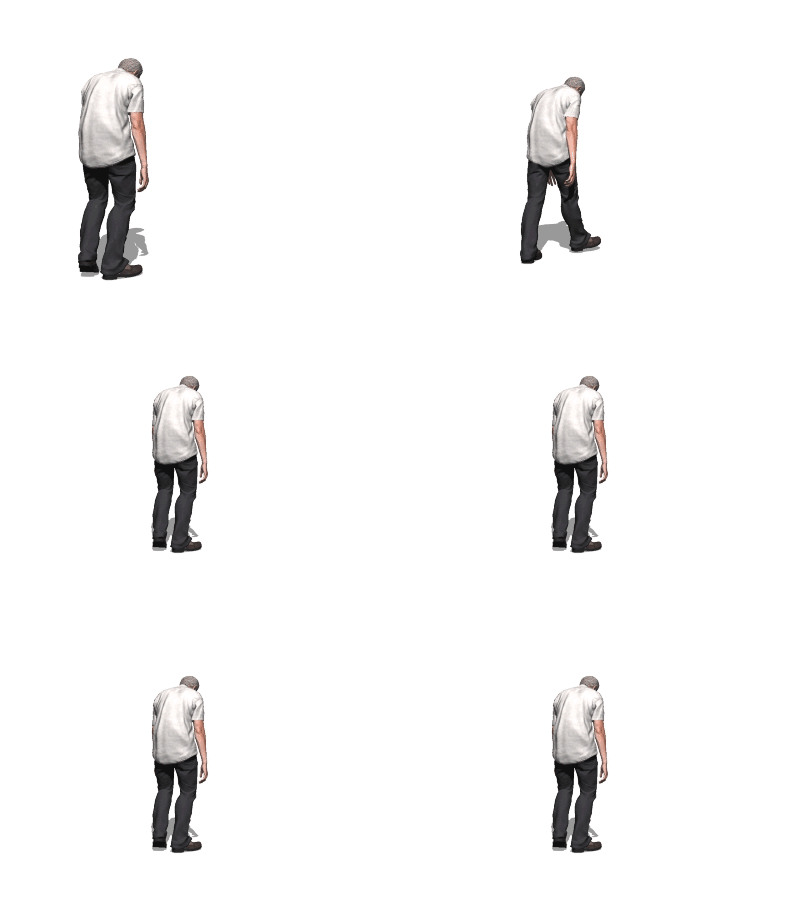
Simon Turner-Tree still always keeps his head down maintaining a lookout for spent matchsticks.
 Mudskipper Press
[…] Simon Turner-Tree could just as easily have included this blog in his series: The Little Irritations of Life. […]
LikeLike