
I have an uneasiness when it comes to ‘dark’ tourism, but it is a qualm that I find I can usually justify.
Visiting Oradour, I had the same questions as when I visited Hiroshima––should I be here; should I be doing this; what am I hoping to achieve?
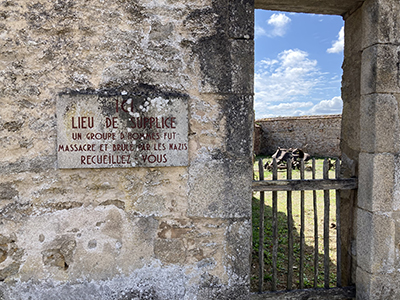
Oradour-sur-Glane was the scene of a massacre. On 10 June 1944, forces of the Waffen-SS 2nd Panzer Division killed 642 inhabitants and razed every building in the village to the ground.
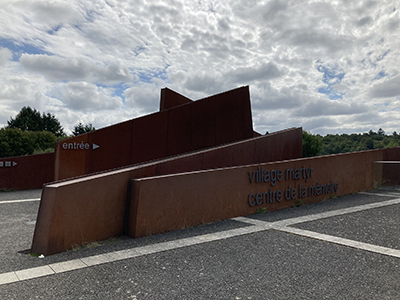
After, World War Two, on the orders of President Charles de Gaulle, the site of the massacre was preserved as a permanent memorial. Nowadays, the neighbouring Centre de la mémoire d’Oradour serves as a visitors’ centre and museum.
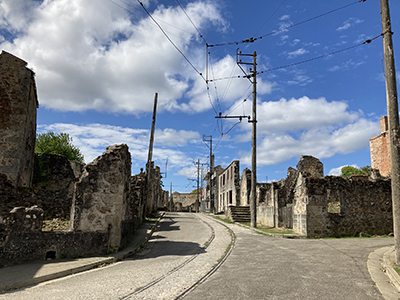
Walking among the streets of the original village of Oradour feels like steeping back in time. Nothing has been changed since the day of the massacre. It is a genuine time capsule of the past.
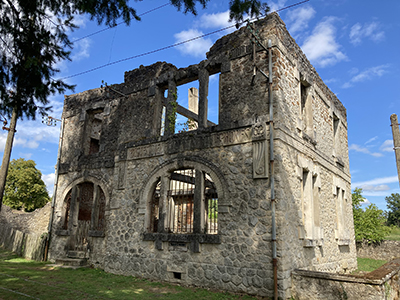
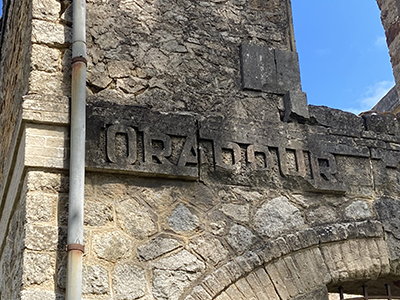
No single building stands wholly intact, although many are still recognisable regarding their original purpose: the garage; the post office; the forge; the school. The old Oradour tram platform stands deserted, although it is still possible to imagine the ghosts of trams traversing the long straight road to the village.
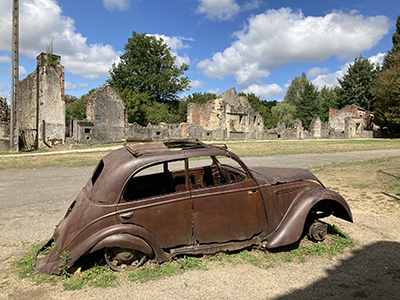
The burnt-out hulks of now classic French cars litter the streets and the backyards of houses, perhaps most iconic Dr Desourteaux’s Citroën, which regularly appears in photographs. And this is another feature of the site––the poignant association of each desecrated building with a named individual, who would have once called each property their home; their business.
At the far end of the village, the catholic church appears surprisingly intact. Upon stepping inside, though, it is apparent that it has suffered in the same way as has all the rest of the village: the roof is missing; even the old church bell buckled and melted.
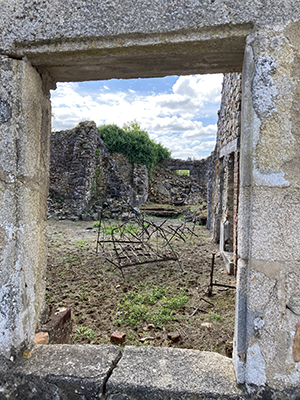
Twisted iron bed frames litter weed-overgrown bedrooms; ancient sewing machines sit in blasted living rooms.
Should I be here? I am still asking the question. But, I think the answer is ‘yes’. Oradour has been deliberately preserved precisely so that we continue to remember.
The world is a far more dangerous place when we choose to forget.
© E. C. Glendenny
E. C. Glendenny remembers Oradour.
 Mudskipper Press