
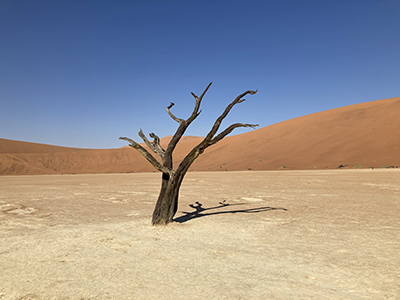
Visiting Deadvlei is like visiting a medieval cemetery. The skeletons here date from the 15th century and older. In Europe, the Battle of Agincourt was happening at the time that the last of Deadvlei’s lives expired. It is a sobering thought. These skeletons should be treated with respect.
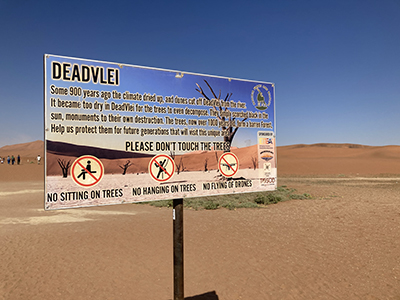
The skeletons in question are those of trees, and they exist in a white clay pan surrounded by high sand dunes. In fact, it is the dunes, which have caused the trees to die. Centuries of shifting sands blocked the pan from a water source, ultimately causing the plants to die, although not to decompose because the atmosphere is so dry.
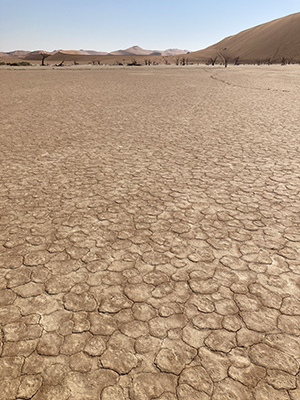
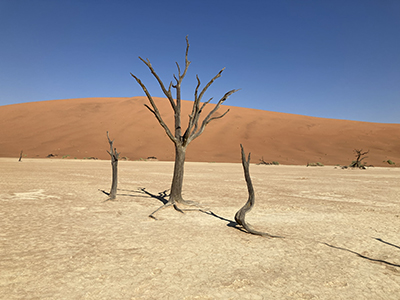
Deadvlei reminds me of one of those glass vials, which tourists can buy, where layers of different coloured sand sit on top of one another but never mix. Here the clear distinctions of colour are the white ground, the orange dunes, and the blue sky. It is a simple combination, but wonderfully evocative. Against this backdrop, the stark silhouettes of the dead trees stand out like the last survivors of an apocalypse.
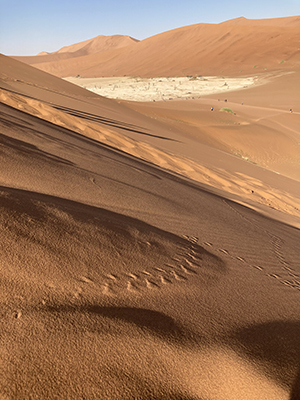
I approached Deadvlei from the ridge of the dunes above, equipped with sturdy walking boots and sensible clothing. It is an unforgiving wilderness; not an easy landscape to visit. This fact notwithstanding, it did not prevent various committed Instagrammers to gather there for a photoshoot, dressed in a variety of inappropriate outfits ranging from bikinis to wedding dresses.
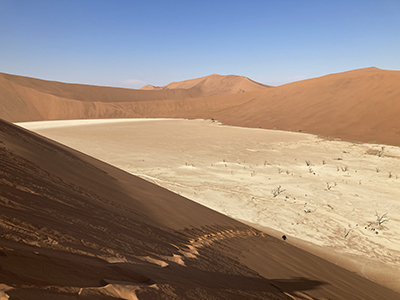
However, the landscape of Deadvlei needs no additional accoutrements. Its natural beauty speaks for itself.
© E. C. Glendenny
E. C. Glendenny is a bit of a natural beauty herself.

