
By most accounts, M. C. Escher did not particularly enjoy the two years he spent in Switzerland.
He moved to the alpine village of Château-d’Œx partially for the benefit of his son’s health and partly to escape Mussolini’s fascist regime in Italy.
Personally, we do not know what Escher had against the country. Snowy mountains; wide, green alpine meadows; the tinkle of cow bells; rösti and fondue. What’s not to like?
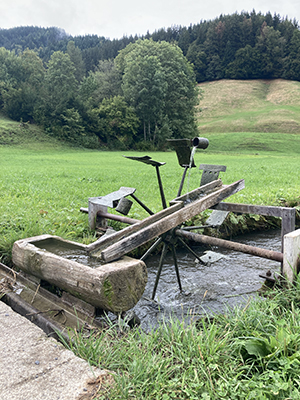
We do wonder, though, if Escher might not have taken some inspiration for one of his later and most famous lithographs – Waterfall, 1961 – from seeing a water wheel in the Swiss landscape.
The small water wheel, which we encountered close to the Benediktinerinnenkloster Au had us instantly drawing comparisons with the Escher artwork.
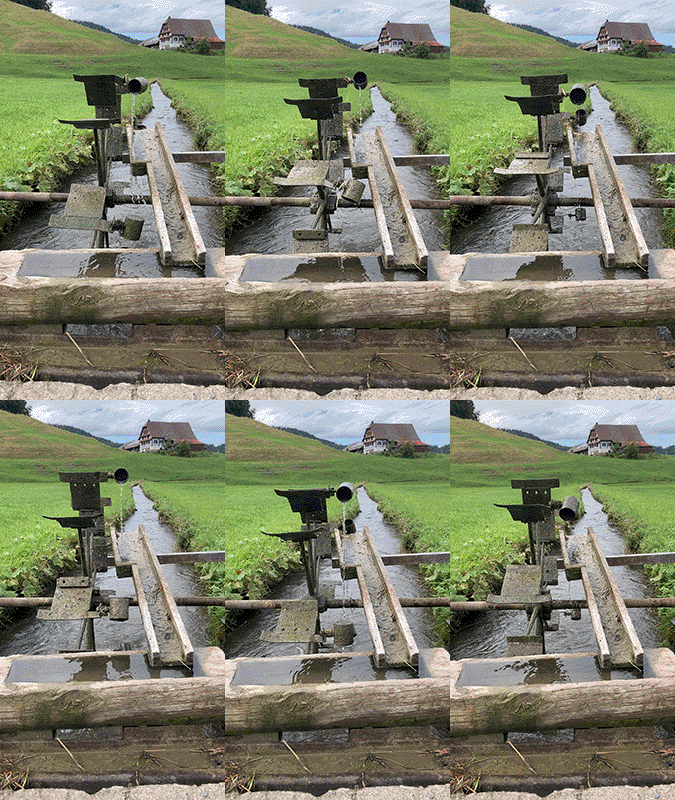
Admittedly, Jean Tinguely should have been a more automatic association but, in truth, the water wheel needed no reference to any other artist. It was a perfect aesthetic object in its own right.
© Os Bros

Os Bros like both Escher and Switzerland.

